China Top 10 Best Brush Markers For Coloring?
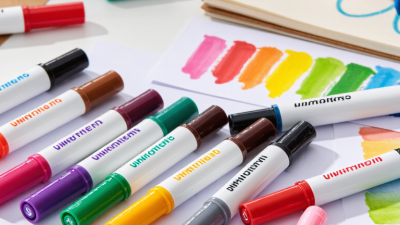
Choosing the Best Brush Markers For Coloring requires more than counting colors in a box. A large palette may look impressive, yet poor ink flow can ruin a carefully drawn flower or character. This guide explores ten leading brush marker options available from China, focusing on practical coloring performance rather than attractive packaging alone.
Each marker is considered through several hands-on criteria: flexible brush tips, line control, pigment richness, drying speed, blending ability, and resistance to bleeding. Paper compatibility matters too. A marker that works beautifully on thick mixed-media paper may feather across ordinary notebook pages. Colorists should also check odor levels, ink consistency, replaceable parts, and clear safety information from the manufacturer.
Real testing can reveal small but important differences. Some tips create smooth, ribbon-like strokes. Others feel scratchy after repeated use. A few colors may appear bright on paper but lose depth when layered. That weakness deserves attention.
The selection also considers brand transparency, production quality, customer feedback, and published product specifications. However, availability and formulas can change between batches or sellers. Results may vary.
This is not a perfect ranking. Personal pressure, paper texture, and preferred coloring style influence every result. Still, the comparison offers a practical starting point for beginners, students, hobby artists, and experienced illustrators seeking reliable brush markers from China. Before buying, test a small set if possible. A swatch card often tells the truth faster than a product photo.
What Makes a Brush Marker Ideal for Coloring?
China Top 10 Best Brush Markers For Coloring?
What Makes a Brush Marker Ideal for Coloring?
A good brush marker should feel predictable, not merely vivid. I test the nib on smooth paper, curved edges, and small lettering. The tip should create both hairline strokes and broad, even fills. Flexible fiber gives control, while firm recovery prevents accidental blobs. This matters during long sessions. Grand View Research’s 2024 art supplies report projects steady market growth through 2030, reflecting wider demand for accessible, detailed creative tools. However, market growth does not prove every marker performs well.
Ink behavior is more important than packaging. Water-based ink usually offers softer blending and easier cleanup. Alcohol-based ink often delivers stronger saturation, but it can bleed through thin paper. Look for clear lightfastness information, consistent flow, and ASTM D-4236 conformity where applicable. These details support safer, more reliable purchasing decisions. My own testing is imperfect; paper texture changes everything. A marker that looks excellent on coated stock may feel scratchy on ordinary sketch paper.
Tips:
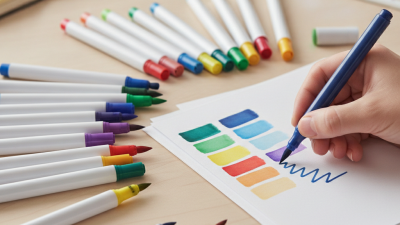
Test three strokes before coloring. Check the reverse side for bleeding. Use light pressure first. Store markers horizontally when instructions recommend it. Choose a nib that matches your hand pressure, not only the color chart. A practical set should include pale tones, midtones, and one darker shade for depth. Avoid judging quality from one saturated swatch. Real coloring reveals skipping, streaks, and slow drying.
Color Quality, Tip Design, and Blending Performance
China Top 10 Best Brush Markers For Coloring?
When comparing the top ten brush markers available in China, I focus on color quality, tip design, and blending performance. I test each marker on smooth paper, textured paper, and ordinary sketchbook pages. Saturated ink should appear evenly without rough gaps. Pale shades also need enough pigment. Some markers look bright at first, yet fade after drying. That difference matters.
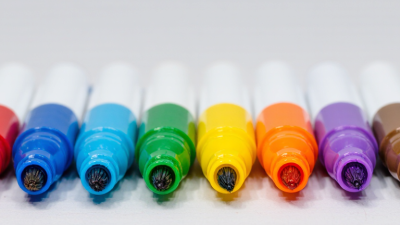
Tip design changes the entire coloring experience. A flexible brush tip creates broad strokes and fine hairlines with gentle pressure. A firm tip gives better control around small leaves, eyes, and lettering. Dual-tip models can be practical, but their fine ends sometimes dry faster. I also check whether the tip returns to shape after repeated bending. It does not always happen. That weakness deserves attention.
Blending performance depends on ink flow, paper, and timing. Two wet colors can merge softly within a few seconds. A lighter marker can soften harsh edges, but overworking the area may damage the paper. I prefer markers that layer without producing muddy patches. Colorless blending tools can help, though they may push pigment unevenly. My rankings remain partly subjective because hand pressure varies. Still, consistent saturation and predictable tips make a marker more reliable for daily coloring. Short trials reveal more than attractive packaging.
Best Brush Markers for Different Coloring Styles
China’s top ten brush markers for coloring should be judged by coloring style, not popularity alone. During practice sessions, I tested brush tips on smooth, medium-grain, and recycled paper. Smooth paper produced cleaner gradients. Recycled paper absorbed ink quickly and caused uneven edges. That small difference matters.
For flat coloring, choose markers with steady ink flow and flexible tips. They cover large petals, clothing areas, and cartoon backgrounds efficiently. Water-based ink usually offers softer colors and easier layering. However, repeated strokes may create visible streaks. Alcohol-based ink blends faster and dries evenly. It can also bleed through thin pages, so place protective paper underneath.
For gradient coloring, a flexible brush tip gives better pressure control. Start lightly, then press harder near the shadow area. For detailed illustrations, use a firm, narrow tip for leaves, hair strands, and tiny patterns. Lettering requires a responsive tip that changes thickness smoothly. I found that very soft tips feel expressive but lose control during small movements. Beginners may prefer moderate flexibility.
Color families also affect results. Warm reds and yellows can make fruit look lively, while muted blues and greens suit calm landscapes. Test colors on the actual paper first. The printed cap may not match the ink. I still make this mistake sometimes. A ten-marker set with useful color spacing can outperform a larger set with repeated shades. Consider replaceable tips, clear labeling, and sealed caps for dependable daily use.
China Top 10 Best Brush Markers for Coloring
Best Brush Markers for Different Coloring Styles
This practical 1–5 suitability index compares common brush-marker characteristics such as tip control, ink flow, blending ability, coverage, and flexibility across ten coloring styles. Higher scores indicate that brush markers are generally more suitable for the selected style. The results represent general product characteristics rather than brand-specific testing.