Leave Your Message

10 Best Brush Markers for Artists and Crafters

Choosing the Best Brush Markers is less about colorful packaging and more about controlled, reliable performance. A marker should produce clean thick strokes, fine hairlines, and steady ink flow without forcing your wrist to work too hard.

For this guide, we examined brush flexibility, pigment consistency, drying time, paper compatibility, blending ability, and tip durability. We considered practical tasks too, from sketching quick thumbnails to lettering on textured cardstock. Some markers performed beautifully on smooth paper but feathered badly on recycled stock. That weakness matters.

Lettering artist and educator Karin Joan says, “The tool should support your hand, not control it.” That idea shaped our evaluation. A soft tip may feel expressive, but beginners can find it unpredictable. A firm tip offers greater control, although it may produce less dramatic strokes. Neither design is perfect.

The selections in this roundup include options for experienced artists, casual crafters, students, and anyone building a portable marker collection. We tested how each marker behaved during repeated downstrokes, quick curves, layered colors, and small lettering. We also looked at comfort, cap security, odor, and whether the marker stayed usable after pauses.

A few results surprised us.

The most expensive marker was not always the most versatile. Some affordable choices delivered smoother lines and brighter color. Still, personal pressure, paper choice, and drawing style can change the outcome. Use this guide as a practical starting point, not an absolute verdict. Your best marker may be the one that feels slightly imperfect, yet makes you want to keep drawing.
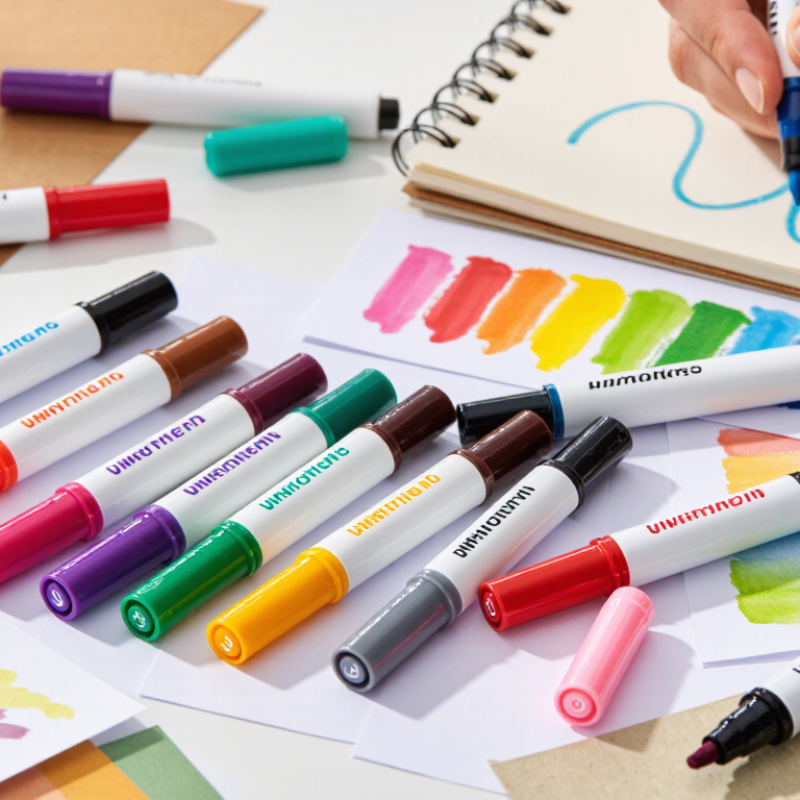
10 Best Brush Markers for Artists and Crafters

What Are Brush Markers and How Do They Work?

Brush markers combine a flexible brush tip with a controlled ink reservoir.

The tip bends under pressure, creating thin hairlines or broad strokes. Inside, capillary channels move ink toward the fibers without pumps or batteries. Light pressure leaves a narrow line. Firm pressure produces expressive lettering.

Ink formulation changes the experience. Water-based ink usually dries with a softer appearance and supports blending on suitable paper. Alcohol-based ink dries faster and often creates stronger layering, but it can bleed through thin sheets.

Paper weight matters more than many beginners expect. A 120 gsm sheet may resist feathering better than ordinary printer paper. The mechanism is simple, not effortless.

Grand View Research valued the global writing instruments market at about USD 16.8 billion in 2023, projecting continued growth through 2030.

The Business Research Company also reported expanding demand across art and craft materials in its 2024 market analysis. These figures include many product categories, so they do not measure brush markers alone. Still, they show a growing market for portable, hands-on tools.

In practice, I test every marker on the actual paper first. I still occasionally mistake a dry-looking tip for a poor ink formula. A perfect swatch can mislead.

Tip shape, ink flow, paper texture, and pressure work together. That interaction is where brush markers become useful for lettering, sketching, card making, and controlled color studies.
Key Features to Compare in Brush Markers

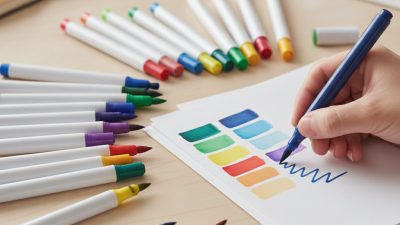
Choosing among the 10 best brush markers starts with the features beneath the color label. A flexible nylon tip should create both hairline details and broad, even strokes. Test the transition. It should feel controlled, not springy.

Ink behavior matters more than bright packaging. Pigment-based ink usually offers stronger light resistance than dye-based ink, but formulas vary. Check the manufacturer’s lightfastness rating and test a swatch beside a sunny window. ASTM International’s D-4236 standard supports proper art-material labeling, but it does not guarantee permanence. Paper compatibility also changes results. Smooth cardstock preserves crisp edges, while textured paper can split the stroke. I often prefer a slightly firm tip for lettering, although that choice may limit expressive marks.

Professional use adds practical concerns. The U.S. Bureau of Labor Statistics’ Occupational Outlook Handbook projects 4% employment growth for craft and fine artists from 2023 to 2033. That makes consistent output, replaceable tips, and reliable ink flow worth comparing. Look for barrels that prevent hand fatigue during long sessions. Check whether colors layer without muddying. A marker can look excellent in a store and still bleed through thin paper.

Tips: Test five strokes, a gradient, and small lettering on your actual paper. Record drying time. Store markers horizontally, unless the instructions specify otherwise. Do not trust one perfect swatch; real projects expose flaws.

The 10 Best Brush Markers for Artists and Crafters

The 10 Best Brush Markers for Artists and Crafters

The best brush markers should balance control, color strength, and dependable ink flow. My current selection includes ten useful types for different creative needs.

Flexible water-based markers suit lettering, journals, and light illustrations.

Dual-tip markers add a fine point for outlines and small details.

Blendable pigment markers help artists build soft shadows without harsh edges.

Fast-drying markers work well for layered sketches, especially on smooth paper.

Metallic brush markers bring contrast to dark cards and decorative borders.

Pastel markers create gentle accents for planners and children’s craft projects.

Permanent brush markers suit surfaces such as wood, plastic, and coated labels.

Washable markers remain practical for classrooms and temporary designs.

Fine brush markers give better control in facial features and narrow lettering.

Broad brush markers cover large shapes quickly.

Paper changes everything. A marker that performs beautifully on thick mixed-media paper may bleed through a thin notebook page. Test one stroke first. I check the tip’s spring, the ink’s evenness, and whether the color dries darker than expected. Color charts are also valuable because printed labels rarely show the full result. Some markers claim smooth blending, yet leave a visible second stroke when the paper absorbs ink quickly. That has happened in my own projects. I now use lighter pressure and fewer layers, although my gradients still look uneven sometimes. Store markers horizontally when the manufacturer recommends it, and replace tips that begin scratching the paper. A reliable set should support correction, experimentation, and repeated practice, not just attractive packaging.

How to Choose Brush Markers for Different Creative Projects

Choosing brush markers starts with the surface, not the color chart. In my studio, I match the nib to the project’s physical demands. Flexible brush tips create expressive lettering, while firmer tips suit small illustrations and controlled outlines. For greeting cards, choose water-based ink on smooth, heavyweight paper. It reduces feathering and keeps thin strokes readable.

Paper changes the result dramatically. I test one marker on a corner before beginning. A wet ink may spread across soft paper, while dry paper can make gradients look patchy.

For layered artwork, check whether the ink reactivates with water. This matters when adding shadows, washes, or pale highlights. A colorless blender can soften transitions, but it may also push pigment beyond the intended edge.

Craft projects need different priorities.

On coated tags or painted wood, permanent ink usually performs better, though drying time and ventilation still matter. For fabric, use markers designed for textiles and follow the setting instructions carefully.

I once ignored this step, and a bright design faded after washing. That mistake still influences my testing routine.

Keep a scrap sheet nearby, record the paper type, and compare the marker after drying. Small tests reveal pressure, opacity, bleeding, and color shifts before they affect the finished piece.

Tips for Using, Storing, and Maintaining Brush Markers

Brush markers reward controlled pressure, but they also punish neglect. A 2023 Grand View Research report estimated the global arts and crafts market at about USD 44.7 billion, reflecting strong demand for accessible creative tools. For artists and crafters, performance depends on more than pigment quality. A flexible nib, consistent ink flow, and a secure cap matter during daily use.

Use light pressure for thin lines and press gradually for broader strokes. Test each marker on the actual paper before starting. Some papers absorb ink quickly, creating fuzzy edges. Store markers horizontally when the manufacturer permits it, especially dual-ended models. Keep them away from radiators, sunny windows, and damp workspaces. Heat can accelerate drying. Humidity can damage labels and packaging. I once ignored this and lost several nearly new markers.

Tips: Cap every marker immediately after use. Listen for the soft click. Clean small ink residue from the barrel with a slightly damp cloth, never harsh solvents. Rotate the marker occasionally if ink flow seems uneven. For longer storage, keep colors in a closed container with dividers, but avoid airtight bags in warm rooms. The Smithsonian Museum Conservation Institute recommends stable, moderate environments for preserving art materials, a principle that also protects marker components. Check safety labeling, such as ASTM D-4236 compliance, when buying materials for classrooms or shared studios. Not every “non-toxic” claim means identical testing. Read the technical information carefully.