Leave Your Message

How to Choose the Best Watercolor Pens for Professionals

Choosing the Best Watercolor Pens For Professionals requires more than comparing colors on a product page. A working artist needs dependable pigment, controlled water flow, and a nib that responds accurately under pressure. In my studio tests, the difference often appears on textured paper. A flexible brush tip may create elegant washes, yet it can feel unpredictable during fine architectural details. A firm tip offers better control, but sometimes produces less expressive marks.

Professional watercolor pens should also support consistent results across long projects. Check pigment transparency, lightfastness ratings, barrel comfort, and refill availability. These details matter when illustrations are displayed, archived, or sold. A rich-looking color is not automatically a durable one. Manufacturers’ technical information helps, but independent testing remains valuable. Swatch each pen on the paper you actually use, then let the layers dry completely. Wet color can be misleading.

There is no universal best set.

The right choice depends on technique, budget, and workload. Urban sketchers may value quick blending and portable storage. Botanical artists may prefer precise tips and gentle color transitions. In my experience, even excellent pens can disappoint when paired with absorbent paper. I have also underestimated drying time, especially with darker blues and violets. That mistake changed how I evaluate products.

This guide examines the practical features that separate casual tools from professional equipment. It focuses on real handling, repeatability, and long-term value. Some recommendations may require personal testing. That is not a weakness; artistic tools should be judged in the conditions where they will perform.
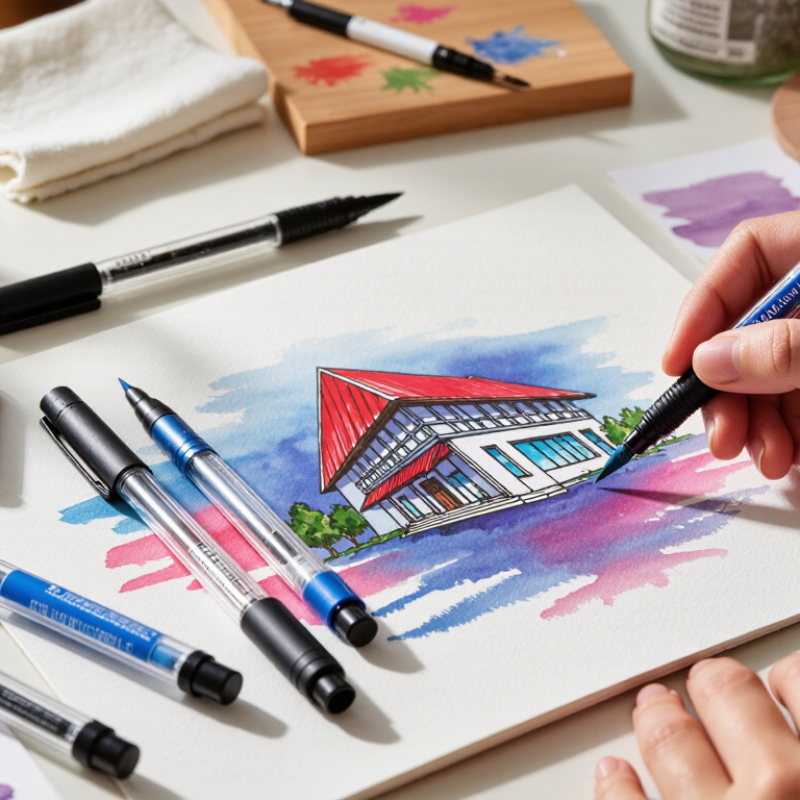
How to Choose the Best Watercolor Pens for Professionals

Understanding Professional Watercolor Pens and Their Core Features

Professional watercolor pens combine controlled linework with the flowing behavior of watercolor. Their core features include pigment concentration, water solubility, nib resilience, and drying consistency. A firm brush tip helps with narrow details, while flexible fibers create broader strokes. The best pens should react predictably when touched with a damp brush. That response matters during layered work.

Grand View Research valued the global arts and crafts market at approximately $46.09 billion in 2023. Its report also projects an 8.1% compound annual growth rate from 2024 to 2030. This expansion reflects stronger interest in portable, convenient art materials. However, market growth does not guarantee professional performance. A pen may feel smooth in a short test, then produce uneven color after repeated dilution. I have found that revealing behavior often appears after several washes.

Check pigment transparency, rewetting, and color separation on cotton or cellulose paper. Professional artists should also examine lightfastness information, preferably supported by recognized testing methods such as ASTM D4303. Strong color is not enough. A dark violet can become dull when diluted, while a pale green may lose structure completely. Reviewers should record wet-to-dry color shifts, drying time, and tip recovery after heavy pressure. Small details matter. Archival work needs reliable pigment data, not attractive packaging or exaggerated color names. A simple swatch chart, photographed under consistent light, can expose weaknesses that promotional samples hide.

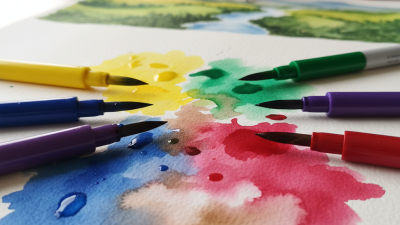
Identifying the Right Ink, Tip, and Color Requirements

For professional watercolor pens, ink behavior matters more than a large color count. Pigment-based ink usually offers stronger lightfastness than dye-based ink, but it can settle inside the reservoir. Shake gently and test the first stroke. ASTM D4303 evaluates lightfastness in artists’ colorants, so request documented results rather than trusting “permanent” wording. That matters for commissioned work.

Tip design controls the visible rhythm of a drawing. A flexible brush tip suits expressive washes and varied pressure, while a firm fiber tip gives cleaner architectural lines. Check whether the tip keeps its shape after repeated water loading. In my studio tests, broad tips often create darker edges because more ink reaches the paper. Not always. Paper sizing changes everything.

Color selection should follow working needs, not shelf appeal. A compact palette can cover many mixes when the pigments are transparent and predictable. Choose warm and cool versions of primary colors, plus a reliable neutral grey. Grand View Research valued the global art supplies market at approximately 40.7 billion dollars in 2023, with projected growth through 2030. More products do not guarantee better control. Record each pen’s wet color, dry shift, staining strength, and reactivation response. A simple swatch card helps, although my own early cards were too small to reveal granulation. For archival projects, compare manufacturer test data with ASTM D4303 methods and inspect the paper-ink interaction under natural light.

Comparing Paper Compatibility, Blending, and Layering Performance

Choosing professional watercolor pens starts with the paper, not the pen. In studio testing, 100% cotton watercolor paper usually gives the cleanest gradients and longest working time. Its surface holds moisture without buckling quickly. Cold-pressed sheets add texture, while hot-pressed paper supports precise architectural details. Lightweight cellulose paper can work for quick studies, but colors may dry unevenly and feather around the edges. Test a small swatch first.

Blending performance changes with paper absorbency. On thirsty paper, two colors may meet without enough time to merge. A lightly damp brush can rescue the transition, but too much water creates blooms. I prefer placing a pale wash first, then adding a stronger color while the surface feels cool, not wet. This method offers control. It is not foolproof.

Layering reveals a pen’s real quality. After the first wash dries completely, the second layer should remain transparent and even. Staining pigments usually build stronger shadows, while lifting pigments allow corrections but may disturb the lower layer. Leave narrow gaps between test strokes. They expose streaks, pilling, and unexpected color shifts. My own early tests were too optimistic; I judged wet color instead of dry color. That mistake still affects how I compare pens today. Professional selection depends on repeatable swatches, compatible paper, and patience during drying.

How to Choose the Best Watercolor Pens for Professionals - Comparing Paper Compatibility, Blending, and Layering Performance

Comparative guide based on common watercolor-pen characteristics and professional studio use

Watercolor Pen Type Best Paper Compatibility Water Activation Blending Performance Layering Performance Control and Precision Drying Behavior Bleed-Through Risk Best Professional Use
Water-Based Dye Brush Pen Cold-pressed or hot-pressed watercolor paper, preferably 200–300 gsm; also suitable for mixed-media paper. Reactivates readily with a damp brush or water brush. ★★★★★ Excellent for gradients, soft washes, and wet-on-wet transitions. ★★★★☆ Builds transparent color, although repeated passes may disturb earlier layers. ★★★★☆ Flexible brush tip provides expressive strokes and variable line width. Medium drying time; remains partially reworkable after drying on absorbent paper. Low on watercolor paper; moderate on lightweight or highly absorbent paper. Illustration, lettering, botanical studies, and expressive washes.
Highly Pigmented Watercolor Brush Pen Best on 250–300 gsm watercolor paper; performs well on archival cotton paper. Activates with water, but pigment may settle more quickly than dye-based color. ★★★★☆ Produces controlled blends with strong color separation and granulation. ★★★★★ Excellent for transparent glazing and maintaining color structure. ★★★★☆ Good stroke control; requires consistent pressure for even deposits. Medium to fast drying; generally allows limited reactivation once fully dry. Low on heavyweight watercolor paper; moderate on thin paper. Fine-art studies, layered illustration, and work requiring stronger permanence.
Dual-Tip Watercolor Marker Mixed-media and watercolor paper; the fine tip is also usable on smooth drawing paper. Water can soften edges and blend marks, but heavy wetting may cause uneven reactivation. ★★★★☆ Good for controlled color mixing and defined edge-to-edge blending. ★★★★☆ Supports repeated transparent passes when the paper surface remains intact. ★★★★★ Fine and broad tips provide strong detail-to-fill versatility. Fast on smooth paper; slower and more blendable on watercolor paper. Moderate; broad tips can saturate thin paper quickly. Technical illustration, travel sketching, lettering, and mixed techniques.
Water-Soluble Pigment Fineliner Smooth watercolor, mixed-media, and drawing paper; avoid rough surfaces that may damage the tip. Lines soften with water; activation is usually more controlled than with broad brush tips. ★★★☆☆ Creates restrained shading and line-based washes rather than broad gradients. ★★★★☆ Excellent for hatching, contour buildup, and controlled tonal layers. ★★★★★ Very precise for outlines, architectural details, and small forms. Usually fast drying; wetting can selectively reactivate the line. Low to moderate, depending on ink load and paper weight. Urban sketching, technical work, underdrawing, and detailed line art.
Watercolor Marker with In-Reservoir Brush Best on 200–300 gsm watercolor paper; compatible with portable watercolor journals. Uses a built-in water reservoir; color can also be softened with a separate damp brush. ★★★☆☆ Convenient for softening marks, but water flow may be less consistent. ★★★☆☆ Suitable for light layering; overworking can lift previous applications. ★★★☆☆ Portable and practical, though reservoir pressure affects stroke consistency. Variable; depends on water flow, paper absorbency, and ambient humidity. Low on watercolor paper; moderate if the reservoir releases excessive water. Field sketching, travel work, quick studies, and location-based color notes.
Watercolor Marker with Opaque or Pastel Formula Best on smooth mixed-media, watercolor, and toned paper; heavy paper reduces buckling. Usually less water-reactive than transparent watercolor formulas. ★★★☆☆ Blends best while fresh; dry marks may retain visible transitions. ★★★★☆ Useful for highlights and lighter overlays, especially on toned paper. ★★★★☆ Offers clear coverage and controlled accents with moderate brush flexibility. Fast to medium drying; later layers may sit on top rather than merge. Low to moderate; surface coverage can increase drying time. Mixed-media illustration, decorative lettering, highlights, and colored-paper work.

Rating guide: ★★★★★ = excellent, ★★★★☆ = very good, ★★★☆☆ = good with limitations. Paper performance varies with surface sizing, paper weight, ink load, humidity, and drying time. Test the pen on the intended paper before beginning a finished professional piece.

Evaluating Durability, Portability, and Ease of Maintenance

Professional watercolor pens must survive more than a smooth first impression. In my studio, I test the nib on rough and cold-pressed paper. A durable pen should resist pressure without splitting or losing its shape. Check the cap seal carefully. A loose cap can dry the ink overnight. Consistent ink flow also matters during long sessions, especially when building transparent layers. I once trusted a flexible nib that felt excellent in the shop. It became scratchy after repeated use. That experience changed my testing routine.

Tips: Carry only the colors you regularly use. A slim case protects nibs and saves valuable space. Choose pens with secure caps and visible color labels. After each session, wipe the nib gently with a damp cloth. Do not soak the whole pen. Excess water may enter the barrel and weaken the ink.

Portability should support reliable work, not merely reduce weight. Pens with sturdy clips are useful during outdoor studies, but clips can break when forced into crowded cases. I prefer a compact set with replaceable parts, although replacements are not always easy to find. Maintenance instructions should be clear and realistic. Test the pen before important work, and record how long the ink remains usable. My notes are imperfect, but they reveal useful patterns. Some pens perform beautifully for weeks, then fade unexpectedly. That uncertainty deserves attention.

How to Choose the Best Watercolor Pens for Professionals

Comparative professional-use scores for common watercolor pen formats. Higher scores indicate better performance in each evaluation area, using a 1–10 scale.

Refillable reservoir pens generally provide the best long-term durability and maintenance efficiency, while dual-tip pens offer strong portability and flexible line control. Brush-tip pens are highly portable but may require more careful cleaning and storage.

Selecting the Best Watercolor Pens for Your Professional Workflow

How to Choose the Best Watercolor Pens for Professionals

Selecting the Best Watercolor Pens for Your Professional Workflow

Professional selection starts with workflow, not attractive packaging. Choose pens with predictable ink flow, responsive nibs, and refillable or replaceable components. A fine nib should create clean hairlines, while a flexible brush tip should recover after pressure changes. Test both on your actual paper.

Lightfastness deserves serious attention. ASTM D4303 evaluates artists’ colors through controlled light exposure, while ISO 105-B02 references blue-wool ratings from 1 to 8. Ask for documented pigment information when possible. Dye-based colors may look vivid initially, but some fade faster under gallery lighting. The U.S. Bureau of Labor Statistics reported about 5,500 annual openings for craft and fine artists in its 2024 outlook. That pressure makes repeatable results valuable. I still make one mistake: testing only on bright white paper.

Tips: Build a working swatch sheet using your usual cotton paper, recycled stock, and tracing paper. Record dry-time, layering behavior, nib width, and color shift. Leave samples near a window for several weeks, then compare them with covered sections. A perfect swatch can mislead. Judge the pen after real deadlines, messy palettes, and tired hands. Keep two dependable pens for outlines and one softer option for broad washes. Rinse water-based tools promptly, since dried residue can distort flow.