How to Choose the Best Watercolor Pens for Your Artistic Needs?
Choosing the right tools is essential for any artist. According to watercolor expert Jane Smith, "The best watercolor pens can transform your artwork." Finding the best watercolor pens means considering quality, versatility, and personal style. Each artist has unique needs depending on their projects.
Watercolor pens come in various types and brands. Some offer vibrant colors while others provide finer tips for detailed work. It's important to test different pens to discover what feels right. Often, the best watercolor pens combine ease of use with superior blending capabilities. This ensures that whether you’re a beginner or an expert, your creative expression shines through.
Artists must also consider the paper they use. Certain pens perform better on specific surfaces. Additionally, users should reflect on their techniques. Finding the perfect match between tool and skill can lead to an enriching artistic experience. The journey towards selecting the best watercolor pens may come with challenges, but it ultimately enhances your art.
Understanding Different Types of Watercolor Pens Available in the Market
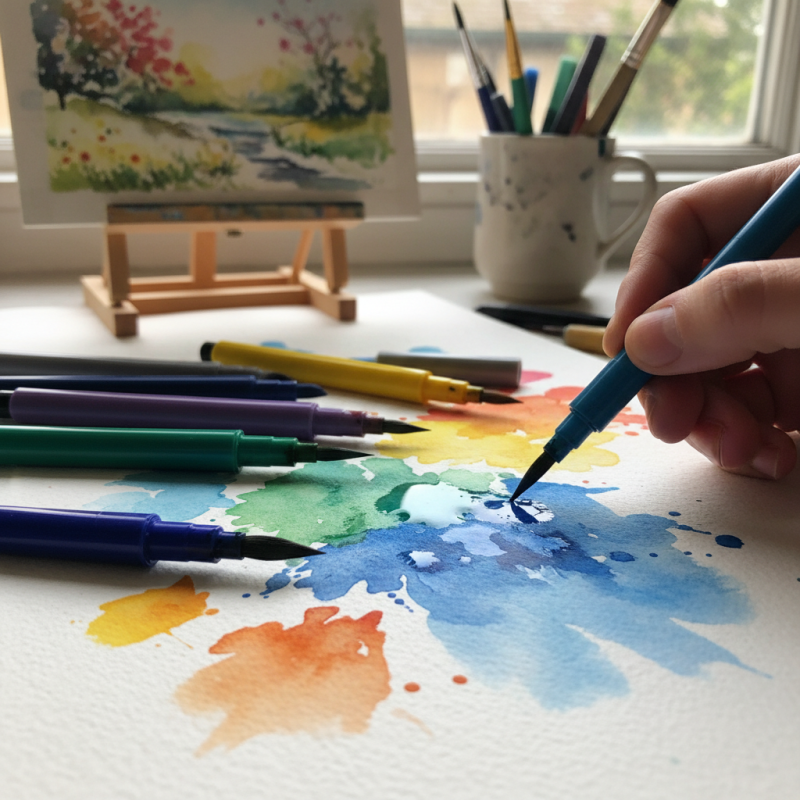
When selecting watercolor pens, understanding the different types is essential. Watercolor pens generally fall into two main categories:
brush tip pens and
fine tip pens.
Brush tip pens offer versatility. They can mimic both broad strokes and fine lines. Artists often prefer these for blending and creating soft washes.
Fine tip pens, on the other hand, are ideal for detailed work. They provide precision, allowing artists to add intricate details to their pieces.
Another important consideration is the ink type. Some pens use water-based ink, which is easy to blend and layer. Others may utilize dye-based inks, which offer vibrant colors but can be more challenging to manipulate.
Additionally, the blending technique can differ. Some artists favor pens that dissolve easily with water, while others prefer those that retain their vibrancy.
Experimentation can lead to unique artistic expressions.
Keep in mind the paper quality as well.
Watercolor paper works best, yet even some mixed media papers can suffice. However, using the wrong paper can result in unwanted bleeding or tearing.
Some artists may overlook this detail, leading to frustrating outcomes.
Always test different combinations to find what best suits your style. Each artist's journey is unique, and reflecting on these choices can enhance your creative process.
Considering Brush Nib Types for Different Painting Techniques
When selecting watercolor pens, the brush nib type can significantly influence your artistic experience. There are several types available, including soft bristle, hard bristle, and flexible nibs.
Soft bristle tips are ideal for creating smooth washes and soft edges. They hold a considerable amount of water and pigment, allowing for gradual blending. However, they might not provide the precision needed for detailed work.
Hard bristle tips, on the other hand, are perfect for fine lines and intricate details. They may require a bit more pressure, which can be tiring, especially during long sessions.
Flexible nibs are versatile and can shift between broad strokes and fine lines. They encourage experimentation with technique, but mastering them may take time and practice.
Choosing the right nib type depends on your individual painting style. Some artists thrive on spontaneity, while others prefer control. It’s beneficial to try different nibs to understand what suits your needs best.
The learning curve can feel daunting, but each nib offers a unique way to express creativity. Reflect on your techniques, and don’t hesitate to adjust your choice as your skills evolve.
Assessing Pen Handling and Comfort for Extended Use
When selecting watercolor pens, assessing their handling and comfort is vital. You’ll use these pens for hours, so they should feel good in your hand. Ergonomics matter. A pen that feels clumsy can detract from your creative flow. Look for designs that support your grip style. Padded grips or triangular shapes may help.
Try out various pen weights. Heavier pens might tire your hand faster. Lighter options may slip out of control. Balance is key. Pay attention to the nib size too. A fine tip offers precision, while a broader tip provides flexibility. It’s worth testing them to see what feels right for you.
Some artists overlook the importance of pen comfort. They may choose based on color or price alone. This can lead to frustration during long sessions. Reflect on your experiences with different pens. What felt good? What didn’t? Make notes to capture your preferences. Being mindful of how you interact with your tools can elevate your artistry.
Watercolor Pens Handling and Comfort Assessment
Comparing Price Ranges and Brands for Best Value in Watercolor Pens
When exploring watercolor pens, price ranges can greatly influence your decision. Typically, you can find them in budget, mid-range, and premium options. Budget pens may lack advanced features but are great for beginners. Mid-range options offer better pigment and blending capabilities. Premium pens, while costly, provide superior fluidity and color vibrancy. Consider your artistic journey and project demands when assessing these ranges.
Brand reputation matters too. Established brands often ensure consistent quality, but that doesn't mean new brands are inferior. Some newcomers may surprise you with innovative designs. Don't just follow the crowd; test different options. Reading reviews and joining artists’ forums can guide you. You might discover hidden gems that offer excellent value without breaking the bank. Representation in the art community, coupled with user experiences, can direct your choices.
Another key factor is adaptability. Some pens are refillable, which could save you money over time. Additionally, check if the pen tips can handle both fine lines and broader strokes. Being versatile can unlock your creativity. However, not all products meet every painter's needs. A pen that works well for one may not fit another’s style. Experimentation is essential to find what truly resonates with your artistic expression.