China Top 10 Cheap Brush Tip Markers Suppliers?
Finding dependable Cheap Brush Tip Markers suppliers in China requires more than comparing online prices. A low quotation may hide inconsistent ink, weak tips, or costly packaging changes. This guide introduces ten suppliers for buyers seeking practical sourcing options, clear communication, and stable production support.
The evaluation focuses on factory experience, product range, sample quality, minimum order quantities, and customization capability. It also considers water-based ink performance, brush-tip flexibility, color consistency, packaging strength, and export experience. Buyers should request recent samples before confirming a large order. Small details matter. A marker may look attractive but write unevenly after several uses.
Supplier information can change quickly. Production capacity, certifications, lead times, and pricing should be verified directly with each company. Public listings are useful starting points, not final proof. This article aims to provide a careful comparison based on observable business information and common purchasing requirements. It does not treat any supplier as perfect.
That matters.
Some manufacturers may perform well for school sets, while others suit stationery brands or promotional orders. A supplier with a lower unit price may require a larger minimum order. Another may offer better color matching but slower sampling. These trade-offs deserve attention. The final choice should reflect your market, budget, quality standards, and delivery schedule. Careful testing remains essential, even when a supplier appears experienced and professional.
What Are Cheap Brush Tip Markers and Who Uses Them?
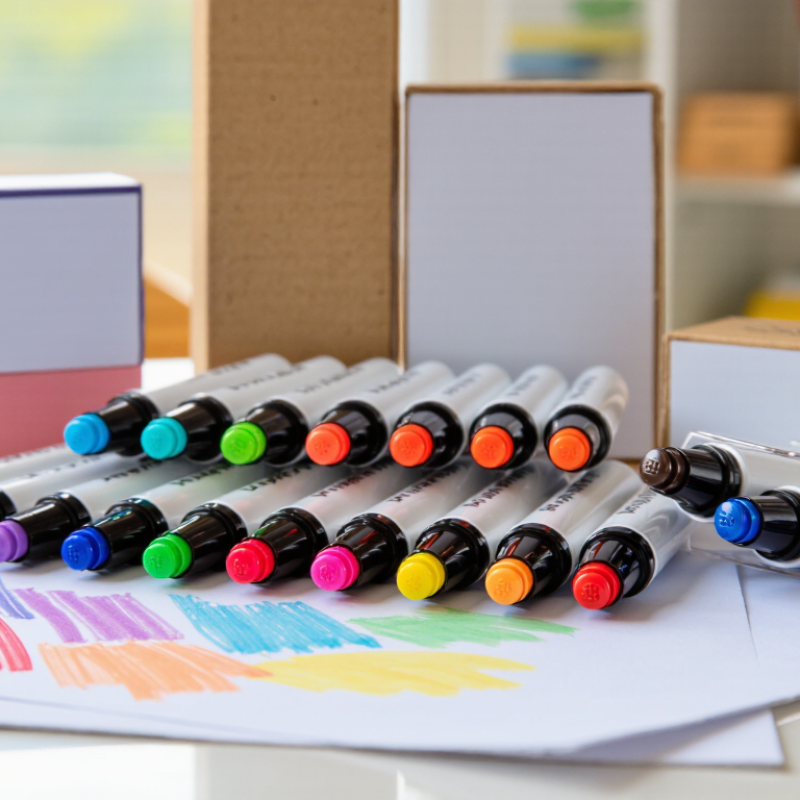
Cheap brush tip markers are affordable drawing tools with flexible fiber or nylon tips. Their points create thin lines when lightly pressed and broad strokes under stronger pressure. Most use water-based ink, which suits paper, sketchbooks, planners, classroom projects, and casual lettering.
Students and beginners often choose them because large sets provide many colors without a high cost. Hobby artists use them for hand lettering, coloring, journaling, and quick illustrations. Teachers may use them for demonstrations or activity sheets. Small businesses and craft sellers also buy them in bulk for workshops. In practical testing, I check tip recovery, ink flow, cap sealing, and paper bleed. Low price is helpful, but quality can vary between batches. I still find some inexpensive markers surprisingly smooth, while others dry faster than expected.
Tips:
Test several colors on your actual paper before ordering many sets. Press gently at first. Store markers horizontally when possible, and close each cap firmly. Check whether the supplier provides ink details, tip size, color samples, and replacement information. A short trial order is safer than trusting photographs alone. Also inspect the packaging for leakage or crushed tips. That small check can prevent wasted materials.
How to Compare China’s Brush Tip Marker Suppliers
Comparing China’s brush tip marker suppliers requires more than checking the lowest quotation. A practical review starts with the nib. Ask for close-up samples, then test thin hairlines, broad strokes, and repeated pressure on 120 gsm paper. The tip should recover after several minutes, not split at the edges. It sounds basic. Many buyers overlook it.
Examine ink performance under real classroom and studio conditions. Compare color density, drying time, bleed-through, odor, and cap sealing after one week. Request ink specifications, safety documents, batch records, and a clear replacement policy. A reliable supplier should explain pigment or dye choices without vague promises. Factory experience also matters. Check production photos, quality checkpoints, sample approval procedures, and monthly capacity. An impressive showroom proves little.
Price comparisons should include packaging, custom colors, mold fees, inspection, and shipping terms. Ask whether the quoted cost changes at 500, 5,000, or 20,000 sets. Small details expose weak planning. I would also compare communication speed and corrective action after a failed sample. My own evaluations have found that the cheapest option can create higher sorting costs later. Still, sample testing is imperfect; humidity, storage time, and paper type may distort results. Record these conditions before choosing a supplier.
China’s Top 10 Affordable Brush Tip Marker Suppliers
China’s Top 10 Affordable Brush Tip Marker Suppliers
China has many cost-effective brush tip marker suppliers for schools, studios, retailers, and custom projects. The strongest options usually support OEM packaging, color matching, and flexible order quantities. A reliable supplier should provide clear specifications for tip width, ink type, drying time, and barrel material. Samples matter more than attractive catalog photos. Test the markers on watercolor paper, coated cards, and ordinary office paper. Check whether the brush tip keeps its shape after repeated strokes. Also inspect leakage, cap fitting, odor, and color consistency between batches. Some low prices hide weaker fibers or unstable ink flow. That risk deserves attention.
Tips: Request samples from several suppliers. Compare ten colors side by side. Ask for production photos, inspection records, and replacement terms. Confirm the minimum order quantity before discussing final pricing. Packaging details also affect total cost, especially for gift sets and export cartons. I would not judge quality from one marker alone. A larger sample set gives more honest evidence.
For dependable sourcing, choose suppliers that communicate clearly and answer technical questions directly. They should explain their quality-control process without vague promises. Useful records may include ink safety documentation, material details, and batch inspection results. Delivery history should also be reviewed carefully. An affordable supplier is not always the cheapest supplier. In my view, the best choice balances stable performance, responsive service, and realistic pricing. My comparison may still miss small workshops with excellent craftsmanship. That is why periodic rechecking remains necessary.
What Features and Services Do These Suppliers Provide?
When comparing China’s top ten cheap brush-tip marker suppliers, buyers should inspect more than unit price. A reliable supplier should offer water-based or alcohol-based options, flexible nylon or polyester tips, and ink that flows evenly after repeated strokes. According to Grand View Research’s 2024 Writing Instruments Market report, demand is supported by schools, offices, and creative users. That mix makes consistent quality important. Ask for samples first. Check line width, cap fit, drying time, odor, and color accuracy under normal lighting.
Strong suppliers usually provide private-label packaging, barcode printing, color cards, and mixed-color cartons. Many also support small trial orders, custom tip shapes, and pre-shipment inspections. This matters because ASTM D-4236 guidance highlights the need for appropriate labeling of art materials, while ISO 8124-1 is often referenced for relevant toy safety evaluations. Compliance documents should match the actual product, not an older sample. That mistake still happens.
Pricing data from Statista’s 2024 stationery market analysis suggests continued volume demand, but low prices can hide thinner tips or weaker seals. Experienced buyers should request ink-leakage tests, tip-recovery tests, and carton drop tests. A useful service includes digital inspection photos and a written replacement policy. Some suppliers promise “non-toxic” ink without presenting current test records. Be careful. Cheap can be practical, but only when production control remains visible. Otherwise, the saving may disappear through returns, delays, and damaged customer trust.
How to Choose the Right Supplier for Your Needs
Choosing among China’s top ten cheap brush tip marker suppliers requires more than comparing unit prices. A low quote may hide higher minimum order quantities, weak packaging, or inconsistent ink flow. During supplier evaluations, I request physical samples and test each marker on paper, cardboard, and smooth surfaces. I check tip recovery, color consistency, drying time, and cap sealing after repeated use. These details reveal more than a polished product page.
A reliable supplier should explain production steps clearly. Ask about nib materials, ink composition, quality inspections, and replacement procedures. Confirm whether the supplier can provide relevant test reports for your market. Communication also matters. Slow replies before payment may become serious delays during production. I sometimes focus too much on price, and that can distort the decision. A slightly higher quotation may reduce waste, complaints, and damaged cartons. Still, a higher price alone does not prove better quality.
Tips: Order samples from three suppliers. Compare the same colors under identical conditions. Check the factory’s capacity, lead time, MOQ, and export experience. Request a written specification sheet. Keep photos of sample tests. If results differ, ask for the reason. Do not accept vague promises. A small trial order is safer than a large guess.