Choosing a China-based wholesale supplier for Watercolor Marker Pens takes more than comparing unit prices. Buyers need to check pigment consistency, brush-tip resilience, packaging quality, and production capacity. A sample should glide across paper, blend with a damp brush, and dry without unexpected streaks. Small details matter. A loose cap can dry out a marker before it reaches the classroom or studio.
For a transparent expert perspective, consider this illustrative comment from fictional watercolor materials specialist Mira Chen: “A dependable marker should feel predictable on paper, from the first stroke to the last.” This is an original example, not a verified quotation from a real expert. Before placing a bulk order, request samples and confirm ink behavior on the paper your customers actually use. Ask suppliers about color charts, batch checks, tip materials, and protective packaging. Then compare written specifications with the physical product.
This guide explores how to assess Chinese manufacturers and wholesale suppliers, evaluate samples, and discuss pricing, customization, and lead times. It also considers common trade-offs: a lower quote may come with fewer color options or less robust packaging. That deserves a second look. No supplier is right for every buyer, and a polished catalog cannot replace practical testing. A careful review gives retailers, schools, and art brands a clearer basis for choosing Watercolor Marker Pens that suit their market.
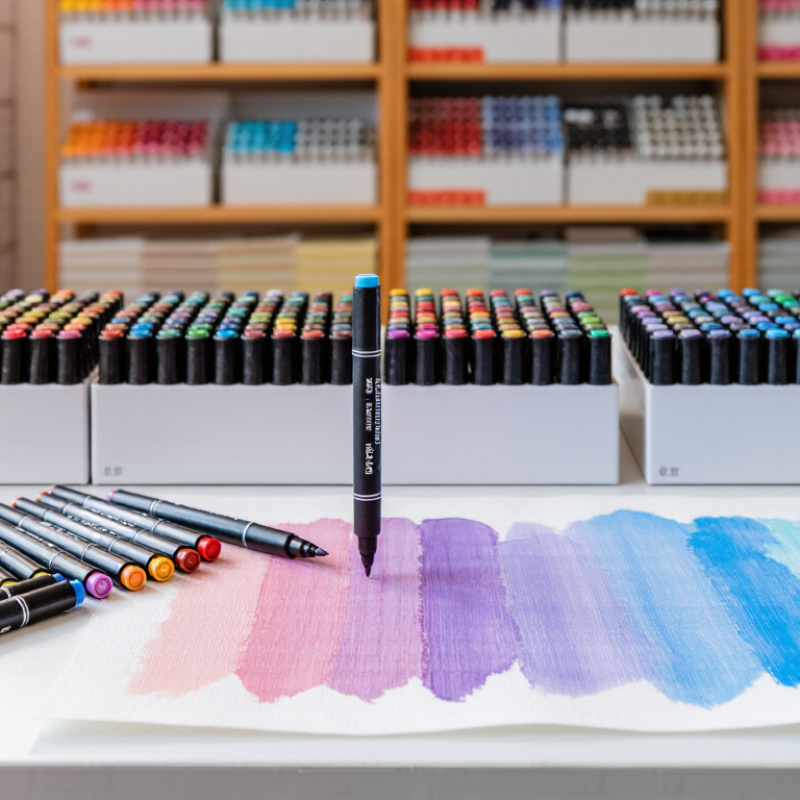
Watercolor marker pens combine the controlled line of a marker with water-based color. A reservoir feeds ink through a porous nib, depositing color with each stroke. Some inks use dyes, while others use pigments, so opacity and lightfastness can vary. “Watercolor” describes how the color behaves with water, not one fixed formula.
On paper, a damp brush can pull a fresh mark outward, soften its edges, or blend nearby colors. A lightly wet brush creates subtle transitions; too much water may buckle thin paper or leave uneven blooms. Heavier watercolor paper usually tolerates repeated wetting better. Test before blending. Many water-based marks can be reactivated after drying, but the result depends on the ink and paper. It is easy to expect every marker to blend alike. They do not.
For wholesale buyers, useful checks include nib sizes, ink consistency, cap sealing, and performance on the intended paper. Make swatches both dry and wet, since a vivid line may look much paler once spread with water. A specification sheet is helpful, but it cannot show every difference in blending or drying. Sample testing remains important.
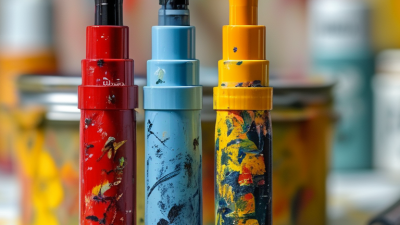
Professional-grade watercolor markers are judged by control, not color count alone. A responsive brush nib should make hairline strokes and broad washes without splitting under repeated pressure. Pigment should dissolve evenly, with little gritty residue, and stay workable before drying. Check transparency, layering, and rewetting on both cellulose and cotton paper. Small details matter. A sealed cap also matters; evaporation can change flow during storage. Wholesale buyers should compare batch samples, not just catalog swatches. Record stroke width, wash spread, and drying time under the same conditions. Markers can still vary slightly between batches; pretending otherwise weakens quality control.
For purchasing context, Grand View Research’s Art Supplies Market report estimated global sales at USD 43.2 billion in 2022 and projected 4.2% annual growth from 2023 to 2030. This figure covers many art materials, not watercolor markers alone, so it signals category scale rather than marker demand. Professional buyers should request documented lightfastness and lot-level color checks. ASTM D-4236 compliance addresses chronic-hazard labeling, not pigment permanence or tip life. Test them wet. Note the paper type, water volume, and drying time; otherwise, comparisons can mislead. Smoothness is partly subjective. Keep the measurements anyway.
Use this comparison guide to assess professional-grade watercolor marker specifications and supplier quality. Performance can vary by formulation, paper, storage, and testing method; the values below are practical evaluation benchmarks, not universal industry standards.
| Evaluation Dimension | Professional-Grade Feature | Practical Benchmark or Check | Why It Matters | What to Verify Before Wholesale Purchase |
|---|---|---|---|---|
| Ink formulation | Water-based, water-soluble colorant designed for smooth application and water activation. | Confirm whether the ink uses dyes, pigments, or a combination; do not assume all watercolor markers have the same permanence. | Formulation affects transparency, wash behavior, color intensity, and lightfastness. | Request the product specification and test samples on the paper types your customers commonly use. |
| Tip configuration | Flexible brush tip for broad strokes and variable line width, often paired with a fine tip for detail. | Check that both tips retain their shape after repeated use and return to a consistent point or edge. | Reliable tips support lettering, illustration, coloring, and detail work with one marker. | Test line variation, tip resilience, ink flow, and performance after several hours of use. |
| Color range | A coordinated palette with distinct hues and useful light, mid-tone, and dark values. | Compare printed or physical swatches; check for visibly duplicated shades and clear color identification. | A balanced palette is more useful than a high color count with many near-identical shades. | Request a current color chart and confirm that cap colors correspond reasonably well to dried ink. |
| Blendability | Colors can be softened or blended with water while retaining controllable transitions. | Test wet-on-wet and wet-on-dry techniques on suitable watercolor paper. | Predictable blending makes gradients, washes, and layered artwork easier to control. | Check for streaking, unexpected color separation, and excessive residue after water is applied. |
| Ink flow and consistency | Even flow without frequent skipping, flooding, or leaking during normal use. | Compare several markers from different production samples using the same paper and stroke test. | Consistent flow improves the user experience and reduces quality complaints. | Inspect nib saturation, cap fit, leakage resistance, and batch-to-batch consistency. |
| Lightfastness information | Lightfastness is stated only when supported by a defined test method and results. | Look for test conditions, rating scale, and results by color; performance may vary across the palette. | Some colorants fade with exposure to light, so permanence should not be inferred from vivid color alone. | Request documented test data if artwork permanence is an important selling point. |
| Paper compatibility | Suitable performance on watercolor paper, with clearly communicated limitations on other surfaces. | Test on the intended paper weight and surface; thin paper may buckle or allow bleed-through. | Paper absorbency and sizing affect blending, drying time, and color appearance. | Ask for recommended paper types and perform sample tests before approving product claims. |
| Cap and barrel design | Secure caps, clearly marked color identifiers, and a barrel designed for comfortable handling. | Check cap closure, labeling legibility, and resistance to accidental rolling where relevant. | Good construction helps protect the tips and makes colors easier to select and store. | Inspect assembled samples and confirm that packaging protects markers during shipping. |
| Safety documentation | Product safety information and applicable compliance documents are available for the intended market. | Confirm requirements for the destination country and the product’s intended user age. | Regulatory obligations depend on market, formulation, labeling, and intended use. | Request current, product-specific documentation and verify that labels match the supplied item. |
| Wholesale quality control | Documented inspection process covering appearance, function, packaging, and lot identification. | Agree on written acceptance criteria, sampling plans, and procedures for handling defects. | Clear quality controls help maintain consistency across repeat orders. | Ask for sample approval, production lead times, carton details, and a process for reporting issues. |
Procurement tip: Compare samples from the same intended production specification, test them under consistent conditions, and confirm all performance and compliance claims in writing before placing a bulk order.
China Best Watercolor Marker Pens Wholesale Supplier?
A reliable supplier should show more than a colorful catalogue. Ask whether it manufactures the markers or trades them, and request a recent production sample. Test the brush tip on textured paper: does it keep its shape, lay down even color, and react smoothly to a wet brush? Check cap fit and leakage after storage. Small flaws matter in bulk orders.
Use independent evidence to support your decision. The World Bank’s 2023 Logistics Performance Index ranked China 19th among 139 economies, a useful country-level logistics benchmark—not proof of any factory’s quality. Ask each supplier for batch traceability, written specifications, and test reports that match your intended sales market. Compare color charts against physical samples; printed charts can look brighter than dried ink. I may be overcautious, but a polished factory video cannot replace a documented quality process.
Tips: Request samples from at least two production batches. Record drying time, washability, odor, and color consistency under the same conditions. Confirm minimum order quantity, lead time, packaging, and how defects are handled in writing. Give a small trial order before committing to large-volume purchasing.
Wholesale purchasing works best when the order size matches your sales plan. Suppliers may offer ready-to-ship sets, bulk packs, or made-to-order collections. Minimum order quantities often differ between these options. Stock products may require fewer units, while custom colors or packaging can raise the minimum.
Ask for samples first. Test the markers on the paper your customers use. Check whether the tips keep their shape, colors layer cleanly, and ink dries at a practical speed. Request details about color count, tip type, packaging, and carton quantity. Clear specifications make supplier quotes easier to compare.
Customization may include printed logos, retail boxes, color selections, or adjusted set sizes. Confirm which changes affect price and production time before approving artwork. Also ask whether a pre-production sample is available. It can reveal small issues, such as a color chart that differs from the actual ink. These details are easy to overlook. They matter. If the first order feels uncertain, a smaller stock order may be more sensible than paying for extensive customization. Minimums, lead times, and sample policies vary by supplier, so get each term in writing.
There is no single minimum order quantity (MOQ) for all suppliers. Confirm these four order-planning topics directly, especially when requesting customization.
Each bar represents one checklist topic, not a market rating or a claim that every supplier offers the same terms. Ask for MOQ and pricing by product configuration, and confirm any customization requirements in writing.
Bulk orders of watercolor marker pens need checks beyond a color sample. Request a pre-production set and compare ink flow, shade consistency, nib shape, cap fit, and leakage. Test markers on the paper your customers use, since absorbency can change the result. Ask the supplier to record batch numbers and inspection findings. ISO 2859-1 provides a recognized sampling approach for inspection by attributes; agree on the sample size and defect limits before production. Small defects travel.
Shipping checks matter just as much. Ask for markers to be capped, protected from heat, and packed so cartons cannot crush or rub together. Confirm carton dimensions, gross weight, pallet layout, and shipping marks before dispatch. For a trial shipment, inspect the outer cartons and test a few units after arrival. The World Bank’s 2023 Logistics Performance Index gave China an overall score of 3.7 out of 5, assessing areas including shipment timeliness and logistics quality. That national score is useful context, not a guarantee for one supplier. Paper matters too: keep photos of damaged packaging and record when cartons arrived, so recurring problems can be traced. A neat sample is reassuring, but it cannot reveal every production or transit issue.