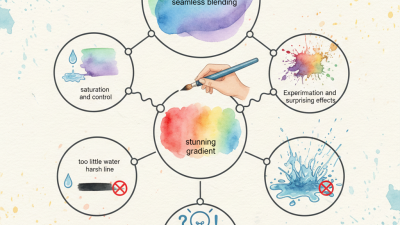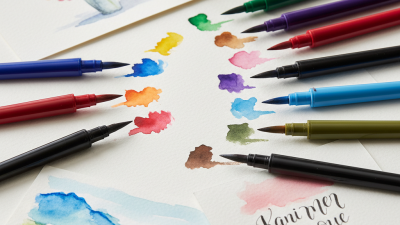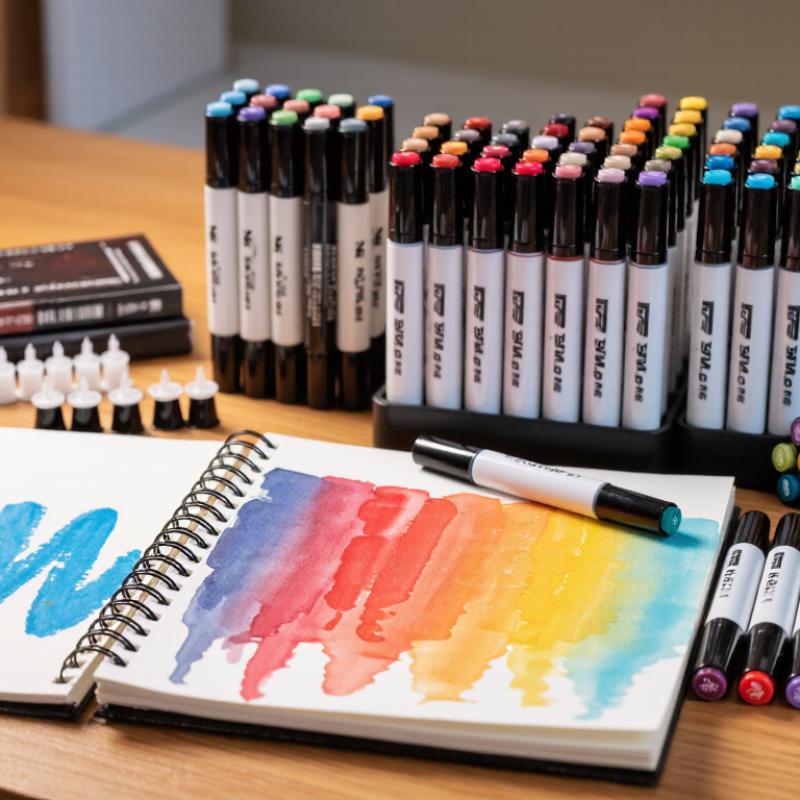
When comparing China-made watercolor marker pens, I check the ink before the color chart. A useful pen should create an even line, then soften with a damp brush. Test it on cotton paper, not glossy stock. Look for clear water activation, gentle blending, and no gritty residue. Pigment behavior matters more than a large color count. Some sets show bright swatches but become weak after drying. I once chose a vivid set that faded near a sunny window. That mistake changed my buying checklist. Ask for lightfastness information, batch details, and a sample sheet. If the seller cannot explain them, reliability is uncertain.
Keep it short.
Tip design affects control. A flexible brush tip suits broad washes and curved strokes, while a fine tip handles lettering and small leaves. The tip should recover after repeated pressure. Test before buying. Check whether the cap closes with a firm click. A loose cap can dry the nib within days. Barrel comfort also matters during a one-hour study. Choose a shape that does not make your fingers tense. Examine odor, leakage, and labeling before purchase. Safety information should be readable and consistent with local requirements. I also compare color names with actual swatches, because printed charts can mislead buyers. Packaging should protect each nib without excessive plastic. Price alone is a poor filter. A modest set with dependable blending may outperform a huge, uneven collection. Still, no checklist is perfect; paper texture and personal pressure change the result.