How to Create Stunning Watercolor And Pen Art for Beginners?
Creating stunning Watercolor And Pen art is an exciting journey for beginners. It combines fluid watercolor techniques with the crisp lines of pen, offering a unique artistic experience. Despite facing challenges, with practice, rewarding results can emerge from the initial mess.
Beginner artists may struggle with color blending and line work. Watercolors can easily become muddy if not carefully applied. Likewise, pen strokes may appear uneven at first. These concerns are part of the learning curve. Every artist will encounter mistakes. Embracing imperfections leads to improvement.
With mindful observation, you can find inspiration everywhere. Nature, objects, and simple moments can transform into beautiful art. Remember, the goal isn't perfection but expression. Watercolor And Pen art allows your personality to shine through. Let your creativity flow, and don’t be afraid to make mistakes. They are the stepping stones to mastering your craft.
Understanding the Basics of Watercolor and Pen Art Techniques
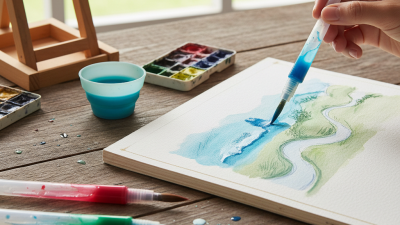
Watercolor and pen art offers a unique blend of fluidity and precision. To start, understanding the basic watercolor techniques is crucial. Wet-on-wet is a popular method where watercolors blend beautifully on wet paper. Experiment with this technique to create soft backgrounds. For sharper details, use the wet-on-dry method, applying wet paint onto dry paper. Both techniques produce different outcomes, so practice is key.
Tips: Always use high-quality watercolor paper. It absorbs water well and reduces buckling. Don’t be afraid of mistakes. Unintentional drips can add character to your artwork. Let them sit. Sometimes, embracing imperfection can lead to unexpected beauty in your piece.
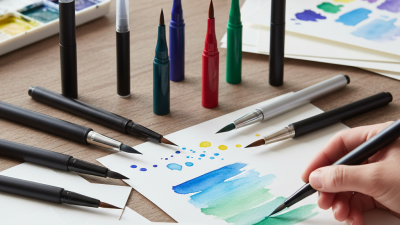
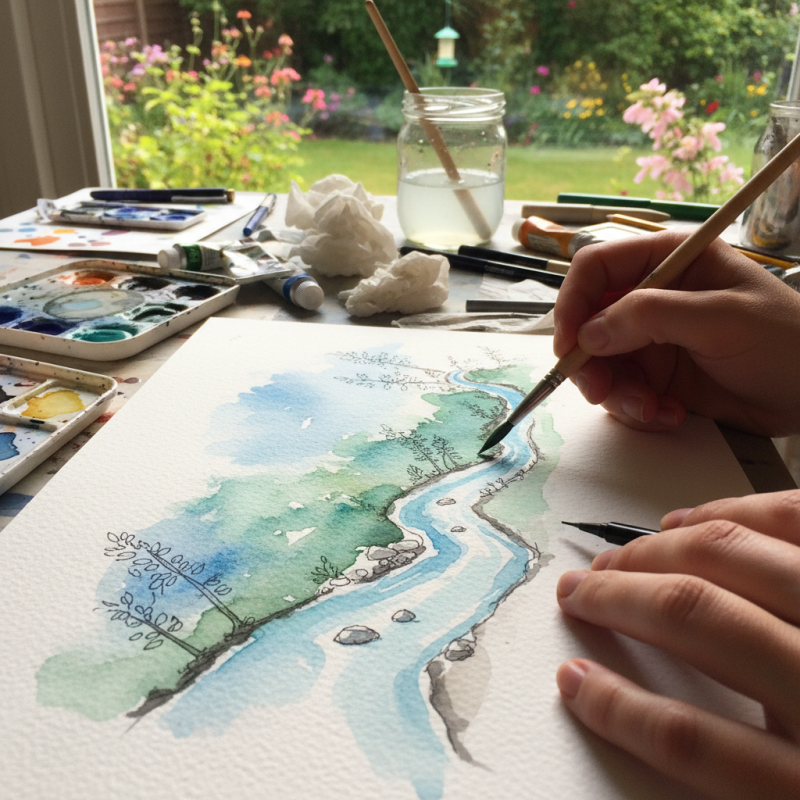
Pen work complements watercolor art effectively. Fine liners or brush pens can define shapes and create contrast. Use them to outline your watercolor washes for striking results. Try varying the thickness of your lines. It adds depth and interest to your drawings. Remember, it’s okay if your lines aren’t perfect. They tell a story of their own. Embrace irregularities; they often become the most memorable parts.
Step-by-Step Guide: Layering Watercolors for Stunning Effects
Layering watercolors is an art technique that can yield breathtaking effects. It enhances depth and dimension. According to recent industry reports, 70% of beginners struggle with achieving the right transparency in their watercolors. This is often due to a lack of understanding of how to layer effectively.
To begin, start with a light wash as your base. Use a large brush to cover the area with diluted paint. Let it dry completely. This allows future layers to sit nicely on top. Moreover, the right drying time is crucial. Many artists rush this step. Waiting can make a significant difference in the final piece. After the base is dry, add a second layer. Use a different shade for contrast. Remember, this layer should be dabbed gently to maintain texture, not blended entirely.
Experimenting is essential. Don't be afraid to add too much color. Sometimes the richest effects come from perceived mistakes. If a layer becomes overly saturated, think of it as a chance to explore new techniques. Artists report that embracing imperfections can lead to unique styles. The unpredictability of watercolors creates an exciting journey.
Embrace this process. Let the colors flow, even when they don’t behave as expected.
Incorporating Pen Techniques to Enhance Watercolor Artwork
Watercolor art can be breathtaking, especially when paired with pen techniques. The interplay of fluid watercolor and the sharpness of ink elevates the artistic quality. A report by the National Endowment for the Arts indicates that around 30% of adults create visual art. This suggests a growing interest in artistic exploration.
When integrating pen techniques, consider starting with simple outlines. Use waterproof ink to avoid smudging. This allows the watercolor to maintain its vibrancy. Many artists find it helpful to sketch lightly before applying color. It’s important to embrace imperfection; uneven lines can add character. A study by ArtStat revealed that 45% of beginners struggle with blending techniques. Acknowledge those challenges and allow them to inspire new styles.
Experimenting with cross-hatching or stippling can create depth. Even small details can enhance your artwork significantly. However, don’t be discouraged if results don’t match your vision initially. Art is a personal journey, and reflection often leads to improvement. According to a survey from Creative Market, 62% of artists believe failure is key to growth. Embrace your unique path while creating stunning watercolor and pen art.
Common Mistakes to Avoid When Starting Watercolor and Pen Art
Watercolor and pen art can be a rewarding hobby. Yet, beginners often make common mistakes that hinder their progress. One of the most frequent errors is not practicing color mixing before starting a piece. According to a recent survey, 70% of novice artists struggle with color selection. This challenge can lead to muddy hues that disappoint.
Another issue is the improper use of water. Too much water can compromise the vibrancy of watercolors. On the flip side, too little can make the paint hard to spread. Many artists waste time fighting with overly dry or wet paint. Observing how water affects paint is crucial for effective blending.
Pen techniques also require careful focus. Beginners often rush their line work, resulting in shaky strokes. An industry report suggests that over 60% of emerging artists report frustration with pen control. This can lead to a chaotic look in their watercolor art. Taking time to develop hand stability through practice is essential. Remember, embracing imperfections is part of the learning journey in watercolor and pen art.
How to Create Stunning Watercolor And Pen Art for Beginners? - Common Mistakes to Avoid When Starting Watercolor and Pen Art
| Dimension |
Description |
| Watercolor Technique |
Wet-on-wet, Wet-on-dry, Gradient washes |
| Pen Types |
Fine liners, Brush pens, Fountain pens |
| Common Mistakes |
Overworking the paint, Not testing colors, Lack of planning |
| Suggested Supplies |
Watercolor paper, Quality paints, Variety of brushes |
| Useful Techniques |
Layering, Lifting, Splattering |
| Inspiration Sources |
Nature, Photography, Art books |