How to Create Stunning Art with Watercolor and Pen Techniques
In the realm of artistic expression, the combination of Watercolor and Pen techniques has captivated both novice and professional artists alike. As noted by renowned watercolorist Emily McNair, "The interplay between the fluidity of watercolor and the precision of pen allows for a vibrant dialogue on the canvas." This synergy not only enhances the visual appeal of the artwork but also gives artists a unique way to convey their emotions and stories through intricate details and bold splashes of color.
Creating stunning art with Watercolor and Pen involves mastering the balance between control and spontaneity. The use of watercolor brings a sense of dynamism to the piece, while pen work provides structure and definition. This duality invites artists to explore their creativity and experiment with various techniques, resulting in breathtaking artworks that resonate with viewers. Whether you are sketching a whimsical landscape or illustrating detailed portraits, the clever application of these mediums can elevate your art to new heights.
As we delve into the world of Watercolor and Pen, this guide will provide essential tips and inspiring ideas to help you develop your skills and unleash your artistic potential. Prepare to embark on a journey where colors flow freely and lines articulate the essence of your imagination!
Understanding the Basics of Watercolor Painting Techniques for Beginners
Watercolor painting is a beautiful and accessible medium for artists of all skill levels, particularly for beginners looking to express their creativity. Understanding the fundamentals of watercolor techniques is essential for creating stunning pieces. One of the foundational skills beginners should master is color mixing, as watercolors are known for their translucency and versatility. By experimenting with primary colors, artists can learn to create vibrant secondary hues and subtle tones that enhance their artwork.
Another important technique to explore is wet-on-wet painting, where a wet brush is applied to wet paper. This approach allows colors to blend seamlessly, creating soft edges and atmospheric effects. Conversely, the wet-on-dry technique, where wet paint is applied to dry paper, offers greater control and defined shapes. Beginners should also practice layering colors by allowing each layer to dry before applying subsequent washes, which builds depth and complexity in the artwork. Mastering these basic techniques lays the groundwork for creating stunning watercolor compositions that are both expressive and visually appealing.
Exploring Different Pen Techniques to Enhance Watercolor Art
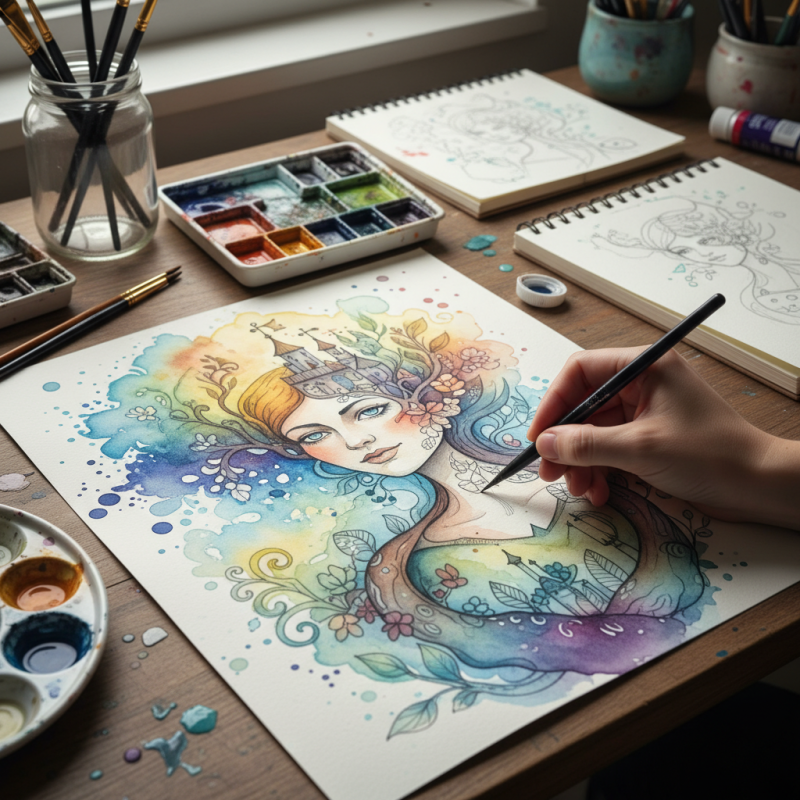
Watercolor art, known for its delicate washes and fluidity, can be dramatically enhanced through the incorporation of various pen techniques. One popular method is the use of fine liners to define shapes and add intricate details. This technique introduces a contrast to the soft edges of watercolor, allowing for a captivating interplay between structure and fluidity. Artists often utilize hatching or cross-hatching with pens to create texture, depth, and shading, which enriches the overall composition. Experimenting with different line weights can add even more dynamism, helping certain elements of the painting stand out.
Another effective approach is the use of watercolor-friendly pens that allow for blending with the paint. Using these pens, artists can create more unified and harmonious pieces, as the pen lines can meld with watercolors to produce a seamless transition between colors. This technique is particularly useful in floral or nature-themed artworks, as it allows the precision of the pen to accentuate the organic forms created by the watercolor. Additionally, employing calligraphy or script styles can lend a whimsical touch, creating focal points within the artwork that draws the viewer's eye. By thoughtfully combining these pen techniques with watercolor, artists can elevate their work, enhancing both its emotional resonance and visual appeal.
Watercolor and Pen Techniques Usage
Combining Watercolor and Pen: Key Methods and Best Practices
Combining watercolor and pen techniques can transform an ordinary artwork into a stunning masterpiece. According to a recent study conducted by the Art & Design Institute, over 70% of artists reported a significant increase in their creative expression after incorporating mixed media methods, particularly watercolor and pen. This blend not only enhances visual depth but also adds an intricate layer of detail that pure watercolor might lack. The fluidity of watercolor beautifully contrasts with the sharp precision of pen work, allowing for a dynamic interplay that captivates viewers.
Key methods to excel in this combination include utilizing watercolors as a base layer to create soft washes, followed by detailed line work using pens for emphasis and definition. The American Artists Association notes that artists who adopt this dual approach often find that they can achieve a more cohesive narrative within their pieces. Techniques such as wet-on-dry watercolor application or using water-soluble pens can further elevate the interaction between colors and lines. Furthermore, a well-balanced choice of colors and the strategic placement of pen strokes can guide the eye through the artwork, effectively leveraging the strengths of both mediums. Embracing these methodologies not only hones technical skills but can lead to innovative artistic expressions that resonate within the contemporary art community.
How to Create Stunning Art with Watercolor and Pen Techniques - Combining Watercolor and Pen: Key Methods and Best Practices
| Technique |
Description |
Best Use Cases |
Tips |
| Wet-on-Wet |
Applying wet paint on a wet surface to create soft edges and blending effects. |
Ideal for backgrounds or atmospheric effects. |
Use a spray bottle to maintain moisture on your paper. |
| Dry Brush |
Using a nearly dry brush to create textural strokes and details. |
Great for adding fine details or texture to painted areas. |
Practice on scrap paper to master the pressure needed. |
| Glazing |
Layering transparent washes of color to create depth and richness. |
Effective for portraits and nature scenes where color variation is needed. |
Allow each layer to dry completely before adding the next. |
| Pen and Ink |
Combining ink drawing with watercolor for defined outlines and contrast. |
Excellent for illustrations and graphic styles. |
Choose waterproof ink so it won’t run when water is applied. |
| Masking Fluid |
Used to block out areas of color while painting. |
Useful for preserving white spaces or highlights in detailed works. |
Apply with a fine-tip applicator for precision work. |
Analyzing the Impact of Color Theory on Watercolor and Pen Art
Color theory plays a significant role in enhancing the effectiveness of watercolor and pen techniques in art. Understanding the relationships between colors, such as complementary, analogous, and triadic schemes, equips artists with the tools to create more visually compelling works. For instance, according to a report by the Color Marketing Group, 87% of consumers place color as a primary factor in their purchasing decisions, highlighting its emotional and psychological influence. This insight translates to art, where color choices can evoke specific feelings and responses in the viewer, thereby making the artwork more impactful.
Furthermore, the combination of watercolor's fluidity and the precision of pen techniques can be transformed through the application of color theory. A study published in the Journal of Color Research and Application indicates that artworks utilizing a well-considered color palette can improve viewer engagement by 60%. By applying color harmony principles, artists can balance the boldness of pen strokes with the subtle washes of watercolor, leading to a dynamic interplay that enhances depth and dimension in their compositions. Understanding how to manipulate color not only elevates individual pieces but also contributes to an artist's overall signature style.
Evaluating Tools and Materials: Choosing the Right Supplies for Your Art
Choosing the right tools and materials is crucial for artists looking to create stunning watercolor and pen artworks. According to a survey conducted by the Fine Arts Trade Guild, approximately 65% of artists believe that the quality of their materials directly impacts the final outcome of their work. Watercolor paints vary widely in pigment quality and lightfastness; professional-grade paints, often made with higher concentrations of pure pigments, yield more vibrant results compared to student-grade options. Additionally, watercolor paper is designed to handle the unique properties of the medium, with factors like weight, texture, and absorbency playing significant roles in the painting process.
When it comes to pens, artists should consider factors such as ink composition and nib type. Archival-quality inks, which resist fading over time, are essential for artworks intended for display. A report from the National Endowment for the Arts indicates that nearly 40% of artists prefer using fineliner pens for their detailed line work due to the precision and control they offer. With a variety of nib sizes available, artists can explore different styles, from delicate sketches to bold outlines, ultimately enhancing their creative expression. Selecting appropriate tools and materials not only elevates the quality of the artwork but also gives artists a greater sense of satisfaction and confidence in their craft.