Leave Your Message
Steel Brush Calligraphy combines the force of a steel brush with the rhythm of traditional written forms. Its appeal is easy to see: firm strokes, visible texture, and characters that hold their shape on a sign or display. Yet the finished look depends on more than the brush. Steel quality, handle balance, filament stiffness, and consistent finishing all affect control. Small differences matter.
The Chinese artist Qi Baishi offered a useful principle for judging artistic work: “The beauty lies between resemblance and non-resemblance.” His words are not a technical standard for steel brushes, but they remind buyers that expressive results need both discipline and room for interpretation. That distinction matters when comparing suppliers. A polished product photo cannot show how a brush feels after repeated use. Ask for clear specifications, sample images, and practical details about materials and quality checks. Do not assume every catalog description tells the whole story.
This guide introduces ten Steel Brush Calligraphy suppliers for global buyers. It focuses on product range, customization, communication, and evidence buyers can verify. Some suppliers may suit bulk orders; others may be better for specialized designs or smaller trials. The list is a starting point, not a guarantee. Compare carefully, request samples where possible, and allow time for evaluation. A supplier’s claims deserve a closer look.
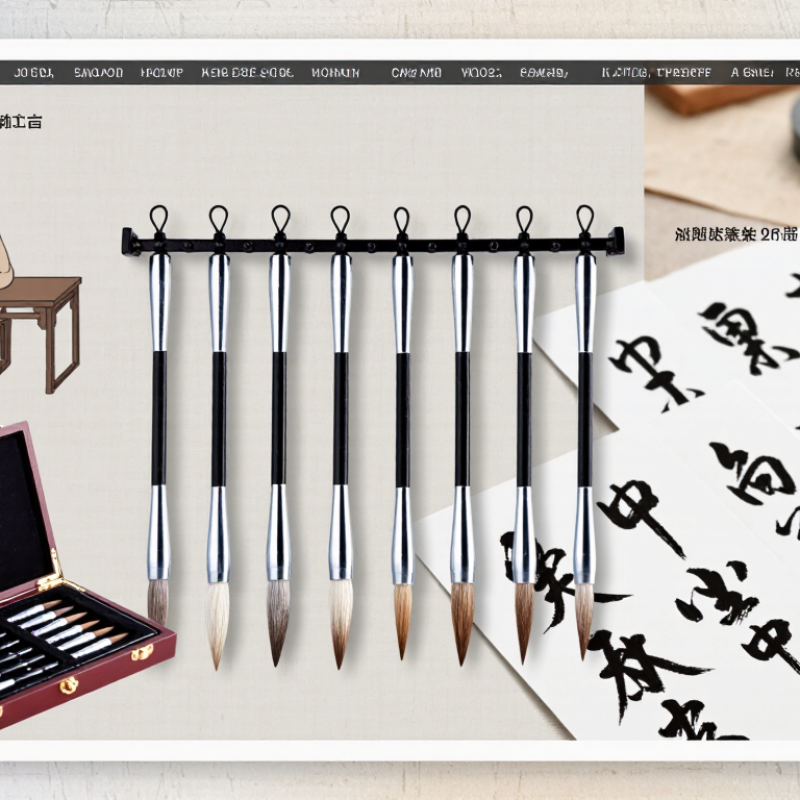
Steel brush calligraphy supplies combine a brush head, a handle, and often a metal ferrule that secures the bristles. Unlike soft hair brushes, steel-wire brushes produce crisp, scratch-like marks on suitable surfaces. Wire diameter, bundle density, and trim length affect stroke width and stiffness. A dense, short bundle can make narrow lines; longer wires flex more and may leave irregular textures. Ink or paint compatibility varies, so buyers should test the brush on their intended paper or board.
Manufacturing usually starts with steel wire drawn to a selected diameter, then cut into short lengths and grouped into bundles. The bundle is fixed inside a ferrule, which is attached to a handle; edges are checked for loose wires and uneven trimming. The World Steel Association reported 1,892.2 million tonnes of global crude steel production in 2023, in its World Steel in Figures 2024 report. That figure describes the wider steel industry, not brush-grade wire specifically. Ask suppliers about wire composition, bristle retention, and sample testing. A polished finish is not enough. Even careful production can leave small differences in stiffness, and that matters when a stroke must repeat.
Scope note: “Steel brush calligraphy” is not a standard category of traditional Chinese calligraphy brushes. Steel-wire brushes are generally cleaning or surface-preparation tools, not writing brushes. To avoid presenting an unsupported company ranking, this table compares ten relevant supplier and product categories for buyers researching steel-brush manufacturing in China. The entries are category descriptions, not named companies or verified rankings.
| No. | Supplier / Product Category | Typical Brush Construction | Common Materials | How It Is Made | Typical Application | Buyer Checks |
|---|---|---|---|---|---|---|
| 1 | Hand wire-brush makers | Wire tufts fixed into a compact handle or backing | Carbon steel or stainless-steel wire; wood or plastic handles | Wire is cut, grouped into tufts, mechanically secured to the backing, then trimmed and inspected. | Manual cleaning of metal surfaces and tools | Wire retention, handle strength, burrs, and corrosion resistance |
| 2 | Scratch-brush manufacturers | Narrow head with a single or multiple rows of wire | Steel wire, stainless-steel wire, molded or wooden handles | Wire is aligned and anchored in a head or base; finished brushes are checked for spacing and secure fastening. | Cleaning welds, corners, and narrow areas | Head dimensions, wire diameter, tuft spacing, and intended surface |
| 3 | Cup-brush producers | Circular cup-shaped body with radial wire fill | Crimped or knotted steel wire; metal cup and threaded fitting | Wire is formed into fill sections, assembled into the cup body, and balanced for use with compatible power tools. | Power-tool cleaning of broad, accessible surfaces | Arbor or thread fit, rated operating speed, balance, and guarding requirements |
| 4 | Wheel-brush producers | Circular brush with wire fill arranged around a central hub | Steel or stainless-steel wire; metal hub or backing plates | Wire tufts or continuous fill are secured around a hub, then the wheel is dressed and inspected. | Machine cleaning, deburring, and surface preparation | Wheel diameter, face width, bore size, speed rating, and wire security |
| 5 | End-brush manufacturers | Small cylindrical head with wire projecting from the end | Steel or stainless-steel wire; metal or polymer shank | Wire fill is secured in a compact head attached to a shank, then trimmed to the specified shape. | Cleaning holes, recesses, and confined surfaces | Shank diameter, head dimensions, concentricity, and tool compatibility |
| 6 | Tube and pipe brush suppliers | Radial wire fill around a twisted-wire stem or central core | Steel or stainless-steel wire; steel stem, sometimes with a handle | Wire is folded and twisted around the core to form a cylindrical brush, then cut to length. | Internal cleaning of tubes, pipes, and bores | Brush diameter, working length, stem flexibility, and wire material |
| 7 | Belt-brush and strip-brush makers | Continuous wire fill held in a metal channel or strip backing | Steel or stainless-steel wire; formed metal channel | Wire is positioned in a channel and mechanically locked; the strip is cut or formed to the required length. | Conveyors, sealing, dust control, and equipment cleaning | Channel profile, fill density, strip length, and mounting method |
| 8 | Twisted-in-wire brush specialists | Filaments clamped between twisted strands of wire | Steel wire core and steel-wire fill; handle or shank as specified | Filaments are placed between core wires, twisted to hold them, and cut or shaped to the requested profile. | Tube cleaning and specialized industrial brushing | Twist security, fill length, stem construction, and dimensional consistency |
| 9 | Custom industrial-brush fabricators | Made-to-order head, strip, wheel, or mounted assembly | Wire grade and backing selected for the application | The design is specified, tooling or fixtures are prepared, components are assembled, and samples are tested against agreed requirements. | Non-standard machinery and production-line needs | Engineering drawings, sample approval, tolerances, minimum order, and change control |
| 10 | Export-oriented brush assemblers | Finished brushes assembled with packaging and export documentation | Depends on the brush design and buyer specification | Components are assembled and inspected, then packed and prepared for shipment according to the agreed order requirements. | Wholesale distribution and industrial procurement | Inspection records, packaging, labeling, shipping terms, and required compliance documents |
Manufacturing overview: Steel-wire brush production commonly involves wire selection, cutting or forming, tufting or twisting, mechanical attachment to a head or backing, trimming, and inspection. Exact processes vary by brush design. These tools are intended for cleaning or surface treatment; conventional calligraphy brushes typically use animal hair or synthetic filaments rather than steel wire.